Up until a few years ago, I could not have even conceived the idea of visiting El Salvador. I guess because of that, I really didn’t expect much from it but I was sososo wrong.
I had actually wanted to go to the island of Utila off Hondouras but apaz Brits need a visa to get into the country now, which you have to get from the physical embassy. Instead, I got on the ‘Brit Boat’ which is the easiest way to get from Nicaragua to El Salvador without flying. I booked it through Bigfoot so I knew it was legit but this shit felt mad sketchy. We drove from León to some army base vibe place which had a little stretch of beach. There was a random desk thing where border police ‘checked our bags’, which meant us taking everything out and them briefly feeling up our packing cubes. Then we waited, and waited and waited until a random man pulled up with a random boat onto this random stretch of beach to take us over to El Salvador. Even when we arrived in El Salvador, our passports were stamped and a group picture (?) taken on our arrival. It was bizarre but the journey still wasn’t done. We still had hours to drive to our first stop, El Tunco.
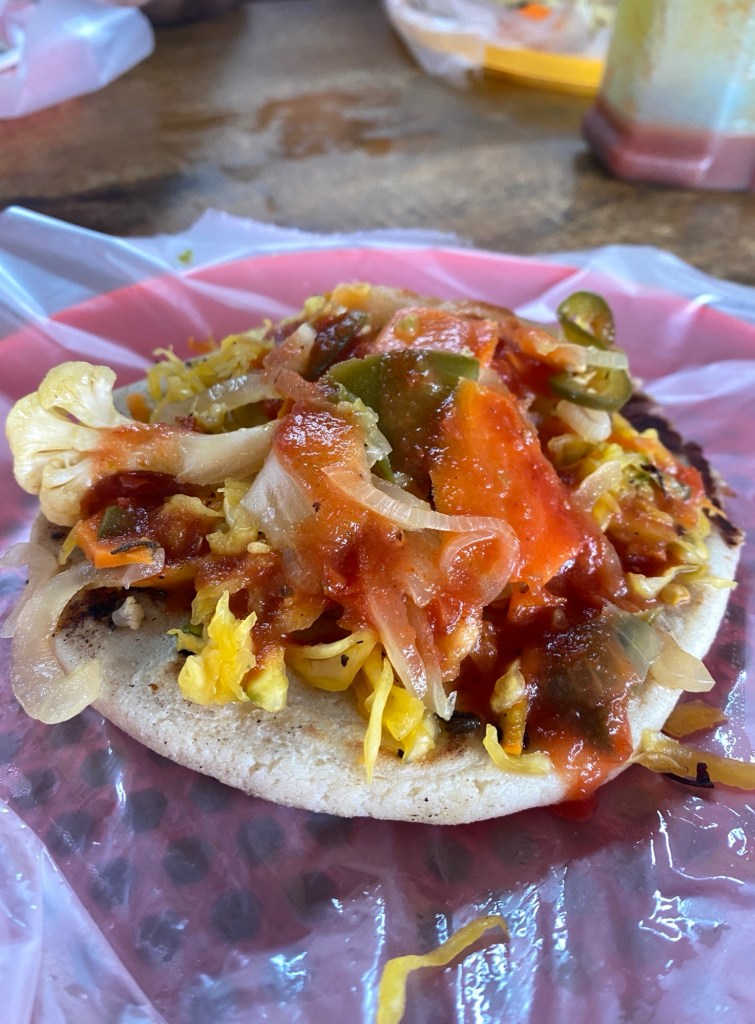
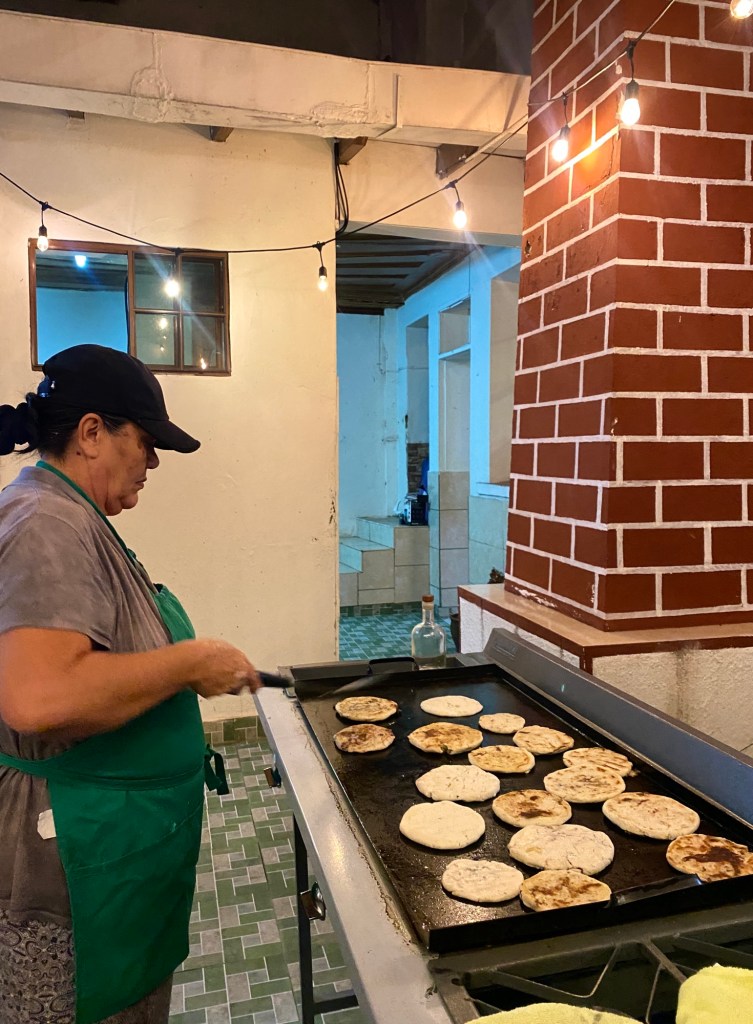
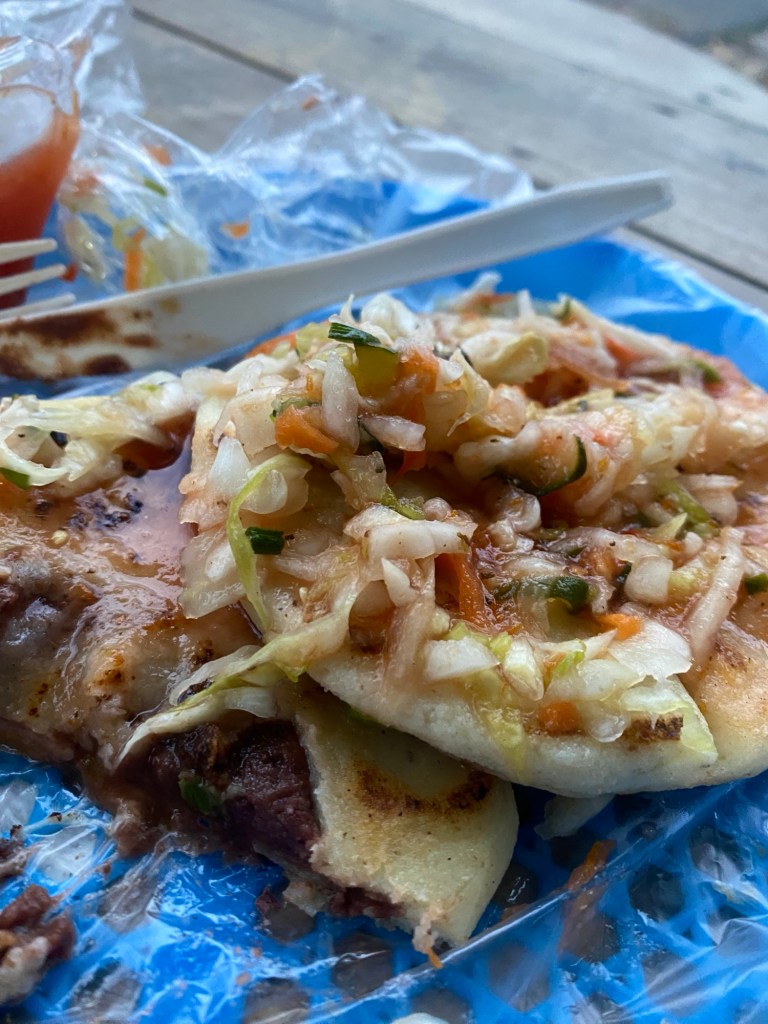
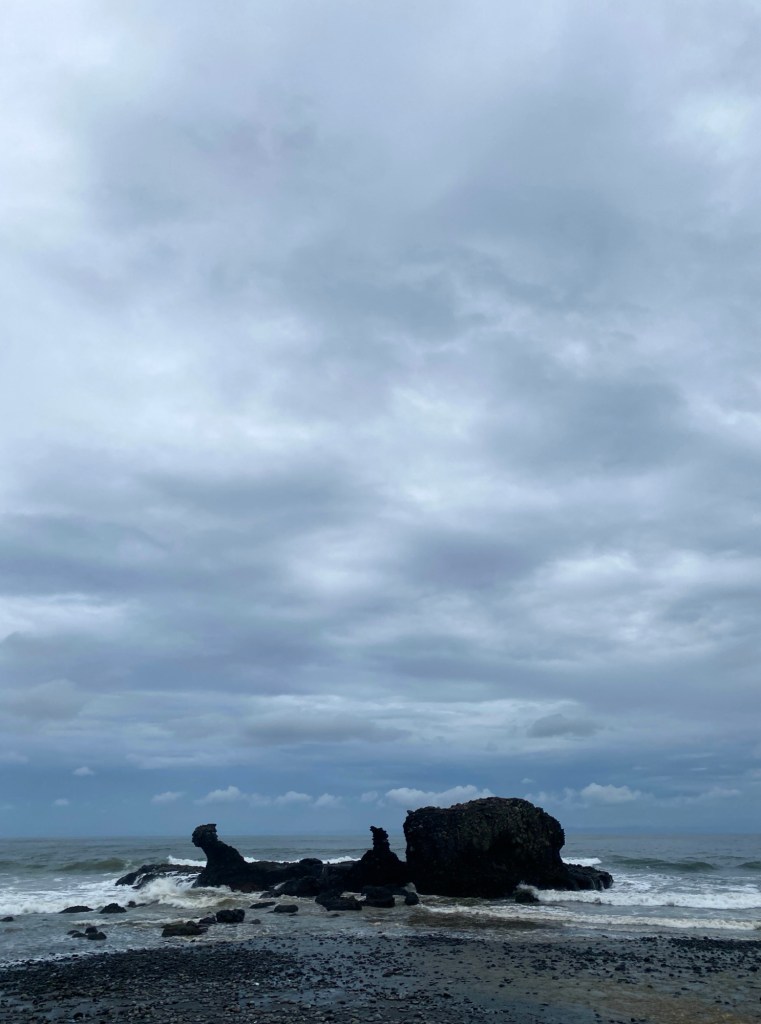
If you want to surf in El Salvador, El Tunco and its nearby beaches is the place to do it. The main bit of El Tunco is literally called ‘Surf City’ and it feels like a proper touristy, surfy, Americany bubble. I low key forgot that I was in El Salvador but for the number of pupusaria’s dotted around. For literally just $1, these flat breads stuffed with deliciousness really became my hyperfixation. Annoyingly, whilst in El Tunco the swell was too big so it was a no go for surfing, and whilst it was a comfortable place to be, it didn’t feel like proper El Salvador, so after a few days, we decided to move on.
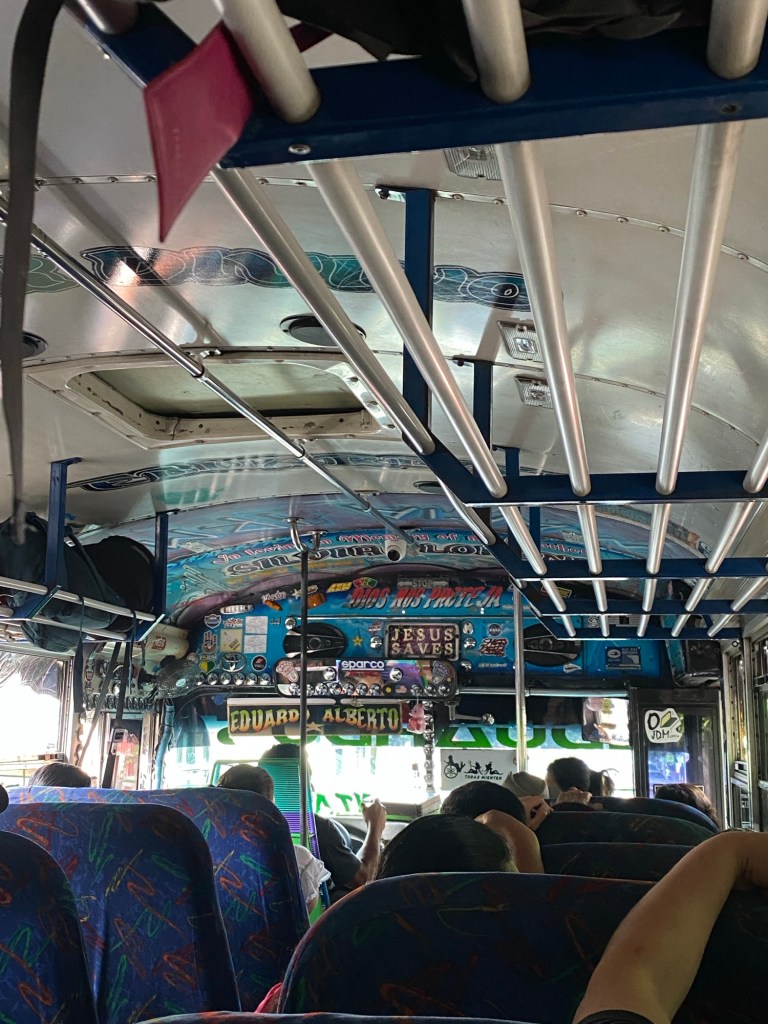
We hopped on the bus and with the help of some really kind people, (which was a common theme in El Salvador!), we managed to find our way onto the express bus to Santa Ana.
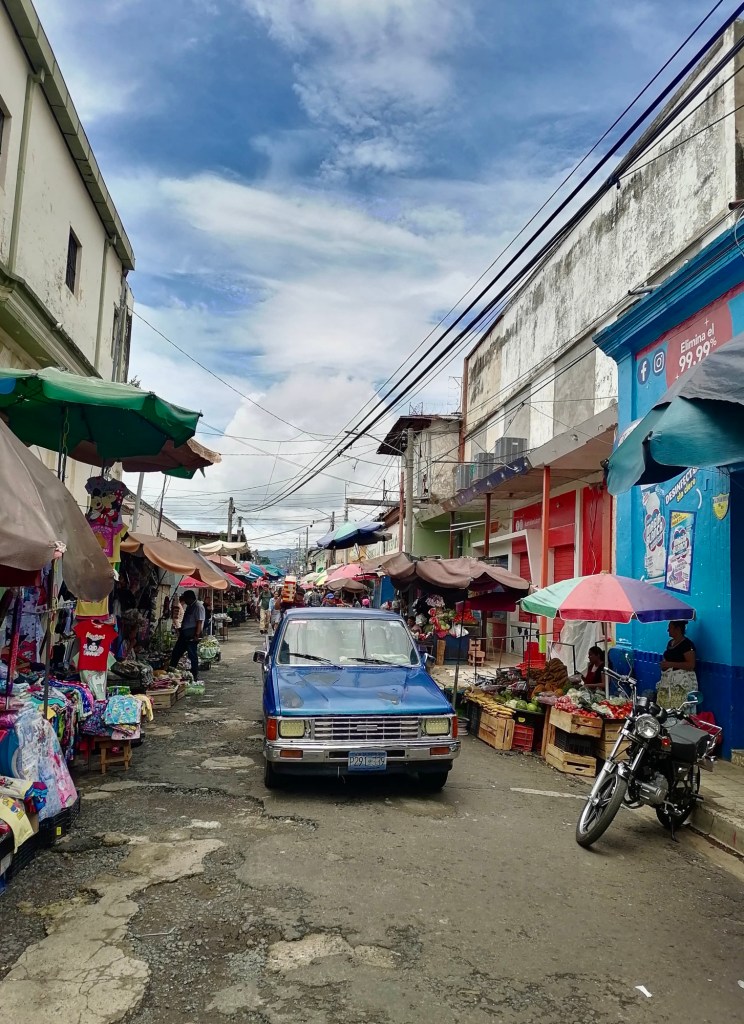
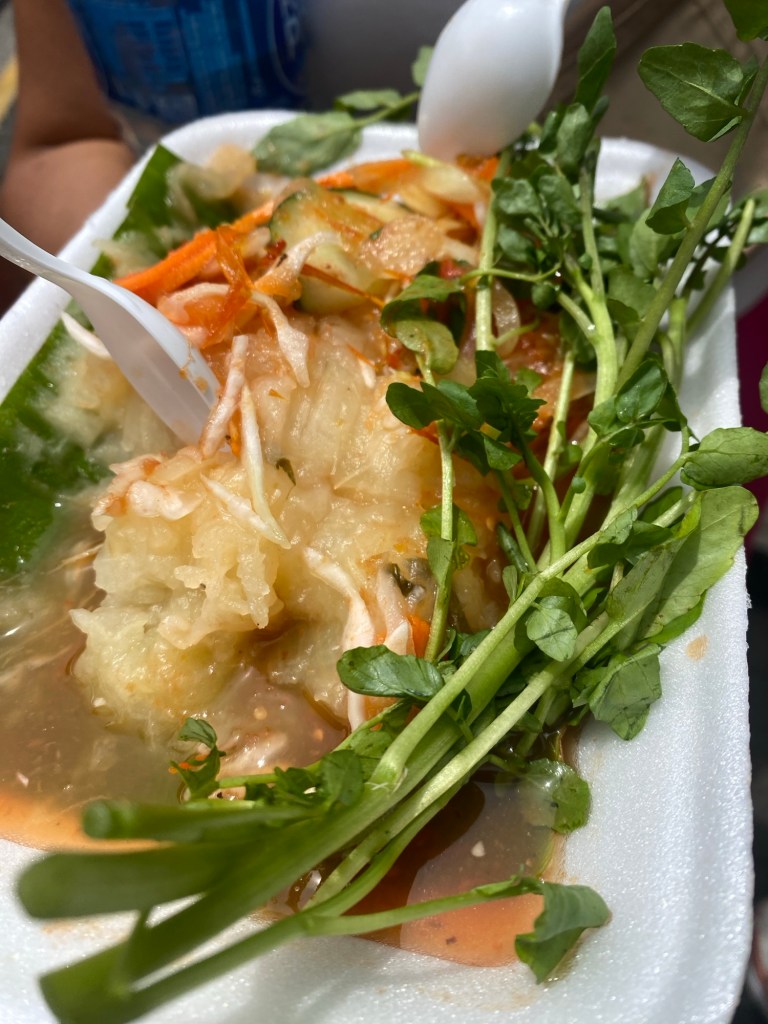
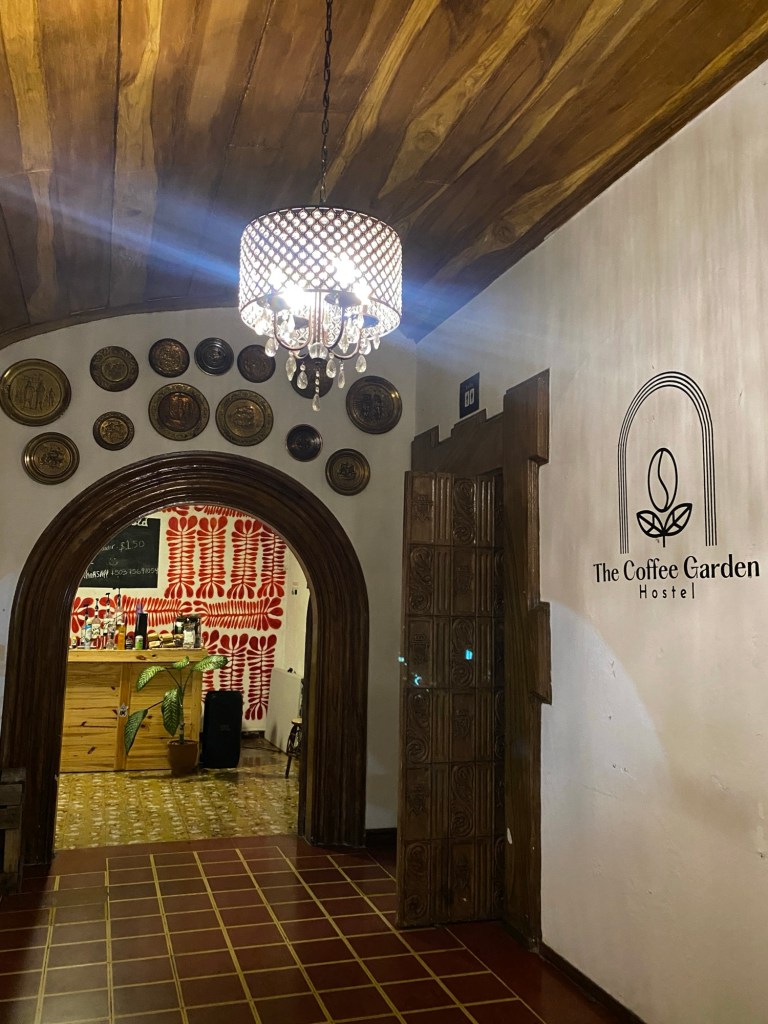
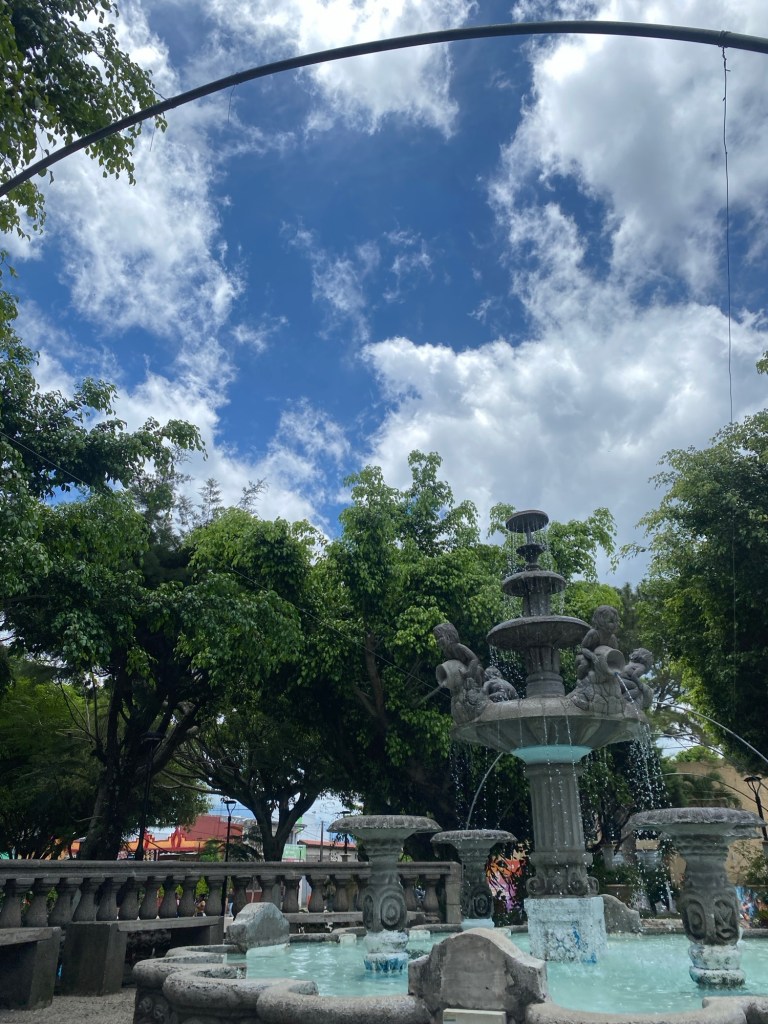
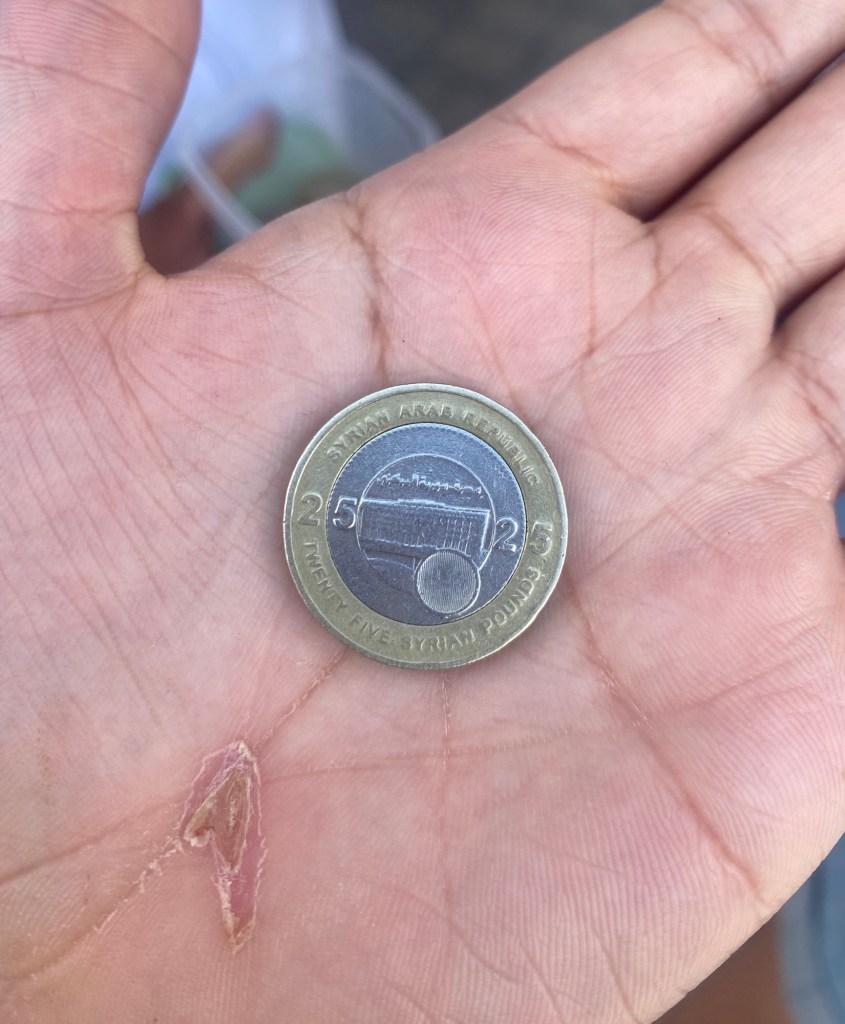
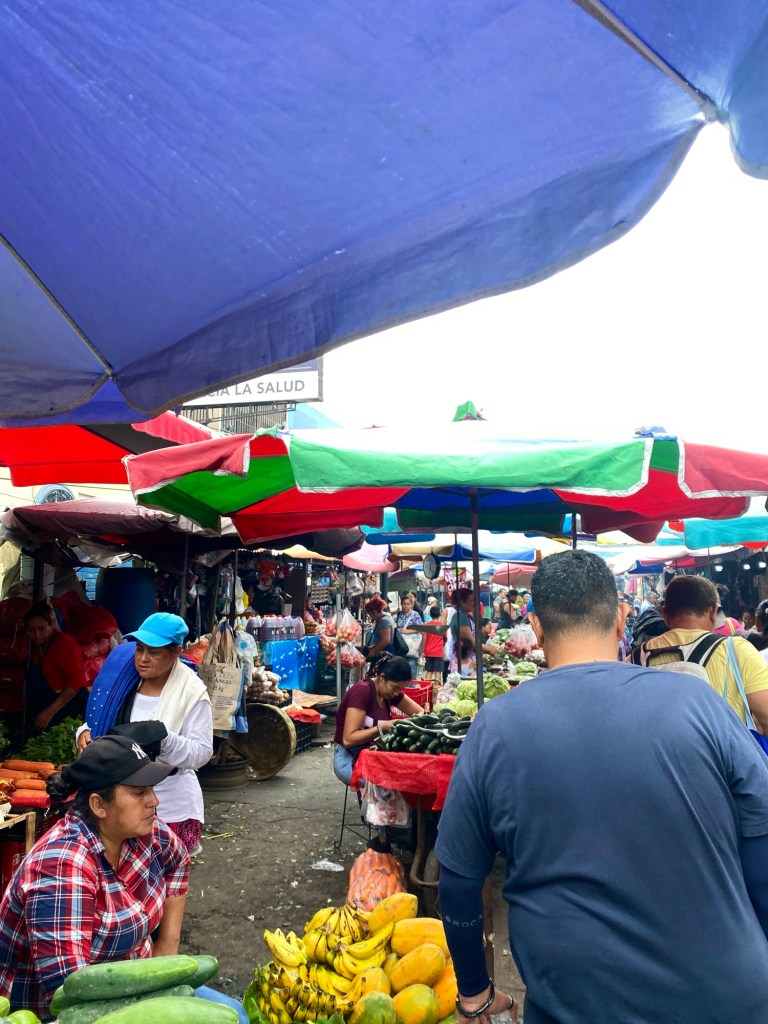
I loved Santa Ana. Firstly, the hostel we stayed at was 10/10. Even though it was a wip when I visited, it was already one of the best that I stayed in. Secondly, just walking around Santa Ana, the people were lovely. We were getting some cash and a random man just came over to us to show off his foreign coin collection, showing me my first irl Syrian Pound, just because he was proud of it. Of course I did a walking tour here too. Ours included a general walk around Santa Ana but also a food market tour. We tried some delicious bits and I found out that El Salvador has a version of horchata. It’s different from the Mexican one, (which I love!), as it’s made from peanuts. We also got to sit and have a frank chat about Bukele, his approach to sorting out the country and where El Salvadorians go next, whilst sipping a Bailey’s iced latte.
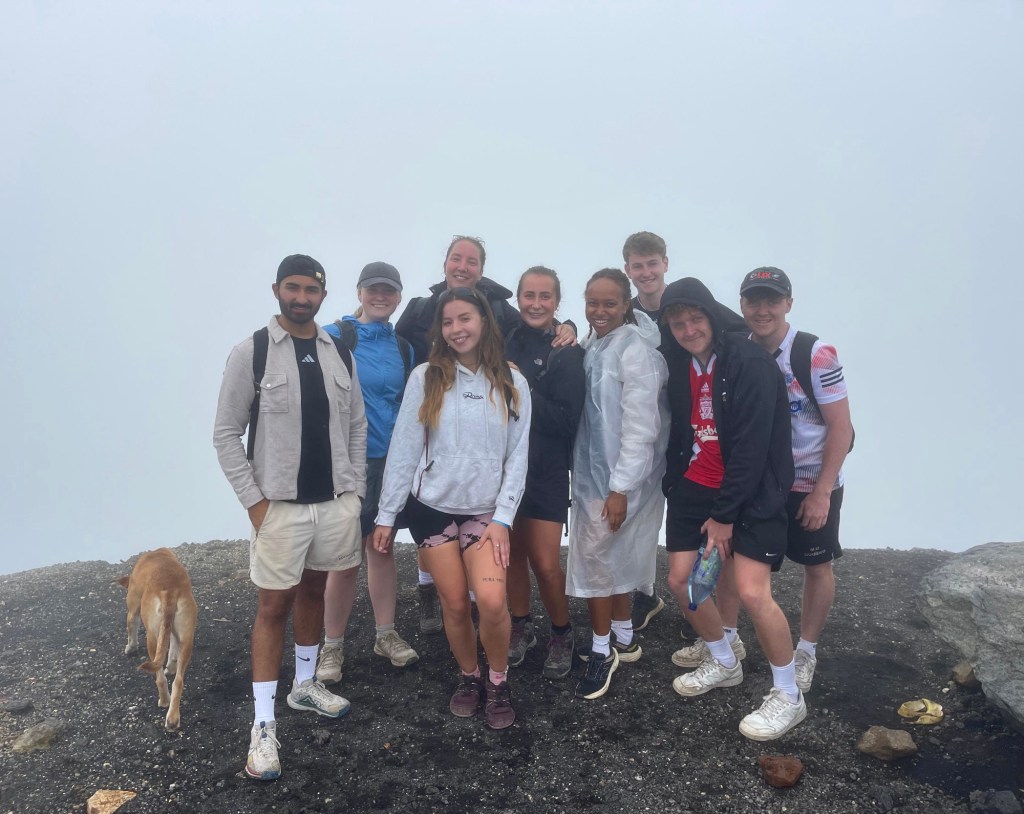
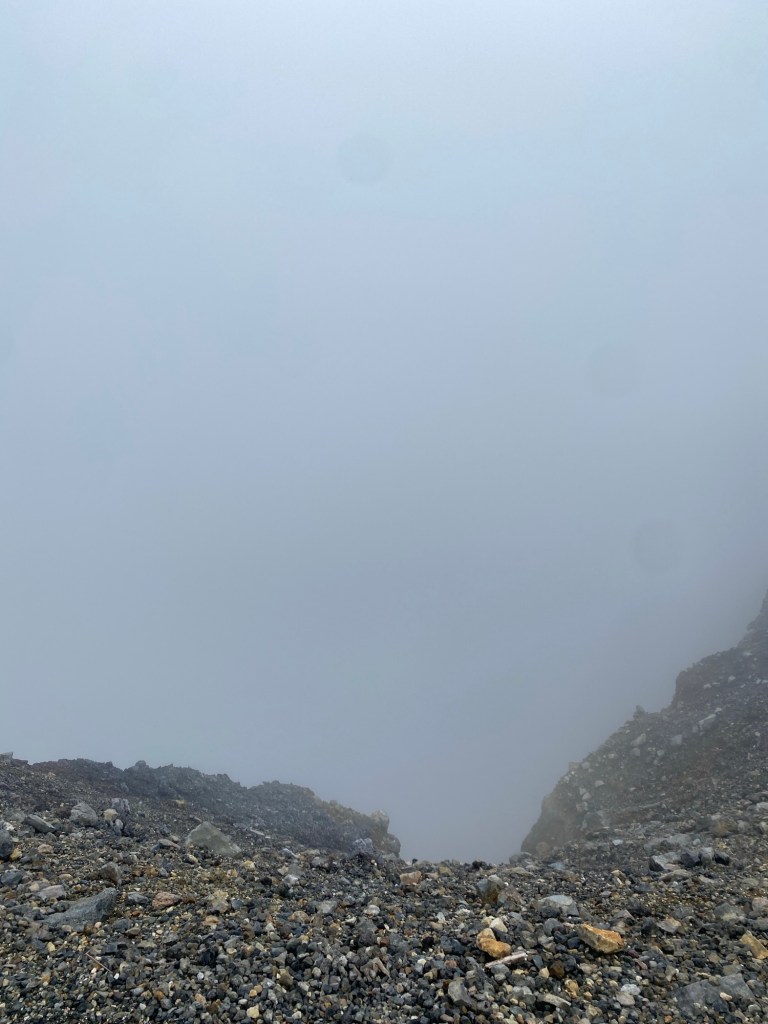
We also did the Santa Ana volcano hike, (and saw nothing, it was cloudy as fuck), but it was a nice and easy hike which I enjoyed. We also did pupusa making with the owner of the hostel’s Mum which was a highlight. The recipe is saved and ready to be tried and tested in my kitchen at home.
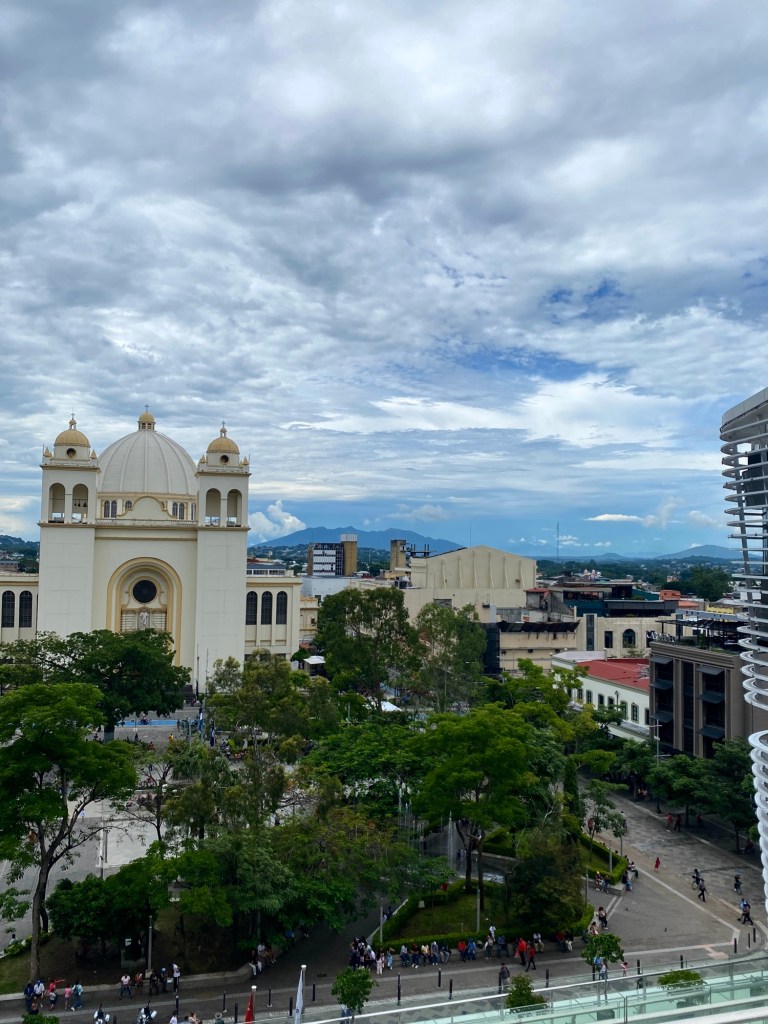
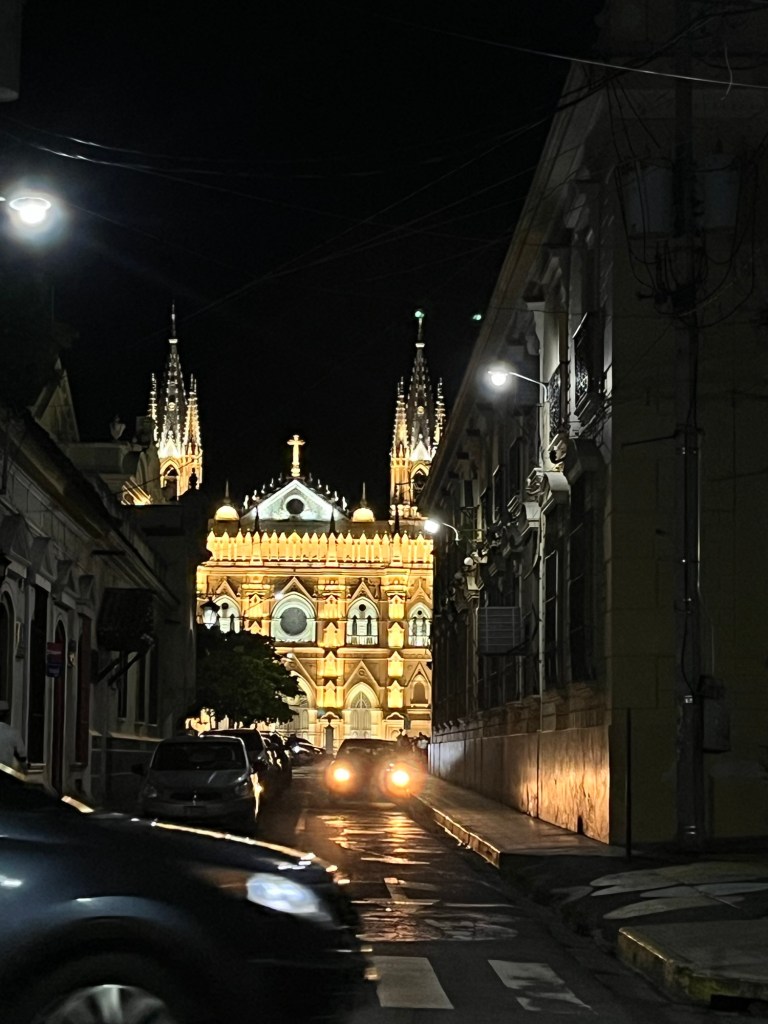
Eventually our little group that came together from León in Nicaragua disbanded and I headed to the capital, San Salvador. I did, (you guessed it), another walking tour here which was super interesting. The centre of the city is so different to what I imagined but the scars of the country’s past are defo present and visible.
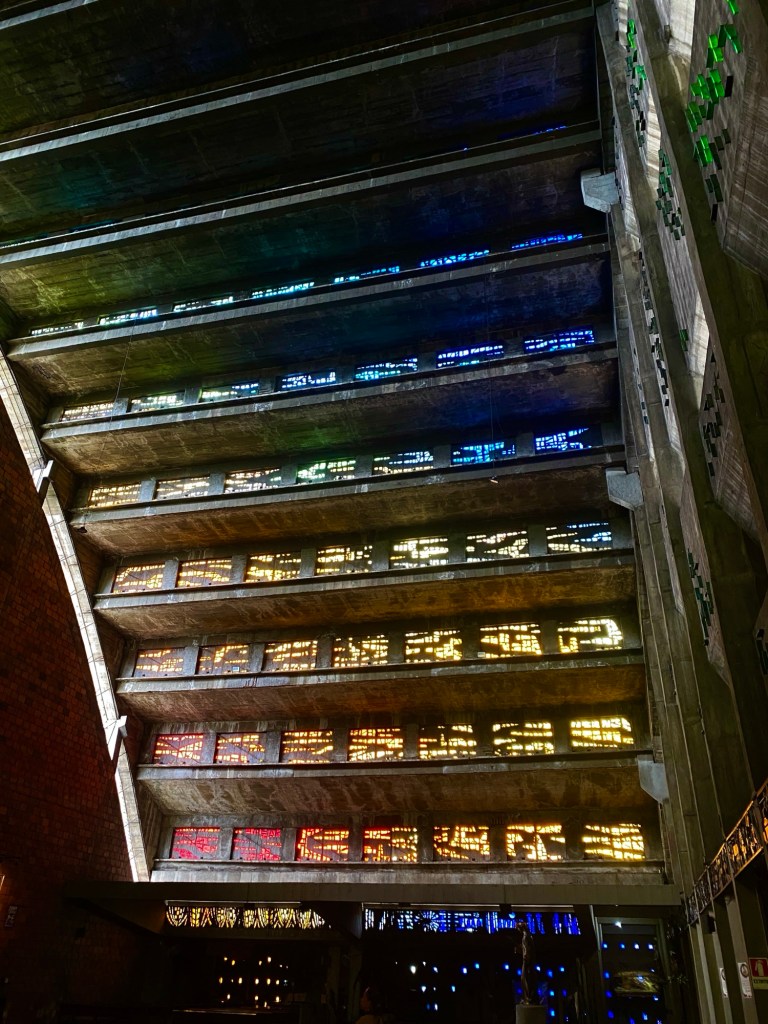
Our tour included a stop at Rosario Church. From the outside, it looks like an ugly brutalist building, but once inside, it has some stunning stained glass windows which lets in the most beautiful rainbow light which is ironic as it has a sad history. I can’t remember the exact story, but in 1979 there was some kind of protest which basically lead to a group of people holing up in the church. There was a mass shooting into the church which killed 21 people who are now laid to rest these. We visited the cathedral, where St Oscar Arnulfo Romero is buried, (the only El Salvadorian saint). He was a vocal opponent of the government at the time and was assassinated for it in 1980, right around the time the Civil War broke out. The 12 year Civil War is seen at the catalyst for the fate of El Salvador’s most recent history. The theory is that people fled the country for America and whilst there, they were marginalised. They found survival by joining and forming gangs. On return to El Salvador, the learnt gang culture continued and eventually took over the country, plunging it into violence and chaos that El Salvador has been notorious for.
Another thing our guide told us was that in 1933 the then president, Maximiliano Hernandez Martinez, signed an act that forbade the migration of certain ethnic groups to El Salvador whilst European migration was favoured. This created an environment where darker skin, (so that of the Black and Native population), was seen as inferior and lead to many leaving, so there really are not many Black people in the country at all. I think with San Salvador not being top of tourist’s list of places to visit either, I found myself getting stared at very intensely. Not in a weird racist way, but more as a curiosity which I guess is better but still isn’t ideal. I found some solace in the huge ass library that sits at the centre of the main square of San Salvador. This building is a behemoth of a library, donated to El Salvador by China. I could have spent a lifetime here but eventually I had to drag myself away.
I actually ended up going back to Santa Ana to head to Juayua again. This post is already super long and my guide for the Siete Cascadas Hike took some 63 photos and 10 videos so I think it deserves it’s own spotlight.
(ps: yes, I am aware that it’s officially more than a year since I started this trip. No, I am nowhere close to finishing up these posts. Agree, I should find shame).
 Dear Disha